
The Ontology of Flow
The move from contemporary digital art from algorithmic generation to data-driven living systems represents a ontological shift. The traditional concept of the "canvas"—a static, bounded, and finalized space—is being systematically replaced by dynamic architectures in a state of perpetual becoming.
These works, categorized as Data-Driven Art, no longer rely on the pseudo-randomness of internal mathematical functions like Math.random(). Instead, they harness the entropic pulse of the physical world captured via Application Programming Interfaces (APIs). The result is an expression where the artwork never repeats, because the world, in its stochastic complexity, never repeats.
Data-driven art acts as a bridge between data visualization and pure algorithmic aesthetics. The objective is not necessarily statistical clarity, but aesthetic impact and emotional evocation through the processing of raw information.
Digital Creation Paradigms
| Aspect | Traditional Generative | Data-Driven (Real-Time) | AI-Based (Machine Learning) |
|---|---|---|---|
| Primary Engine | Algorithms & math noise (e.g., Perlin). | External data streams & live APIs. | Models trained on massive datasets. |
| Output Nature | Deterministic within limits. | Evolutionary, bound to physical events. | Probabilistic, based on learned patterns. |
| Artist Role | System creator (rules/constraints). | Signal curator & data interface architect. | Model trainer & prompt director. |
In this taxonomy, the artwork transitions from a discrete object to a systemic process. Its "life" derives from its connectivity. The artist shifts from authoring the final image to designing an ecosystem that permits unpredictable emergence.
API Aesthetics: Tokyo's Weather as a Digital Brush
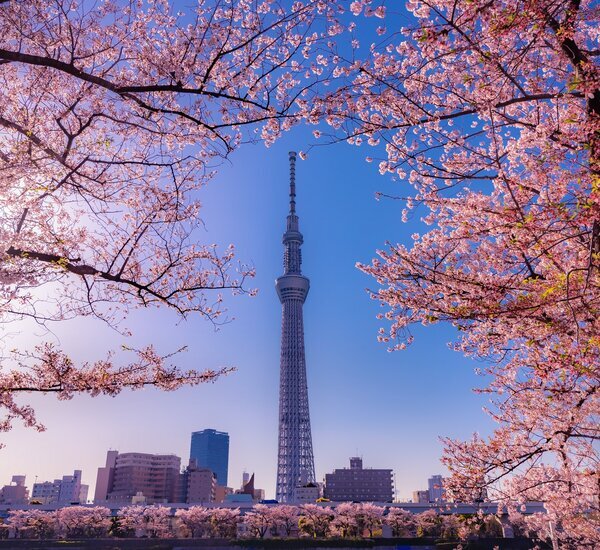
Utilizing meteorological data as an aesthetic engine exemplifies data-driven art's capacity to synthesize the natural environment within digital space. Tokyo's climate offers rich periodicities and anomalies that map directly to visual parameters.
For a digital artist, these datasets are vectors of transformation. Using libraries like Three.js and React Three Fiber, components react dynamically. Temperature dictates the color temperature of a ShaderMaterial, mapping lower values to cool tones, while long-term climatic warming manifests as persistent red saturation over the artwork's lifespan.
[ DATA_CURATOR_DASHBOARD ]
Select an external data stream to observe procedural rendering adaptation.
Mapping: Temp (24°C) → Color Palette (Cool to Warm).
Mapping: Wind Speed (14km/h) → Sine Wave Frequency.
[ STATUS ] Organic noise interpolation active.
Financial Volatility and Geometric Turbulence
The cryptocurrency market provides one of the most dynamic data streams for contemporary art. Unlike climate systems, financial data is marked by speculative bubbles and extreme deviations.
The translation of this volatility is mediated by the Fractal Market Hypothesis (FMH). In data-driven art, the Hurst exponent and fractal dimension of an asset dictate the complexity of a 3D mesh. High turbulence results in fragmented, jagged geometry, while market stability produces fluid forms.
Living Architectures: Space as a Responsive System
"Living Architectures" expand data art beyond the screen into physical structures exhibiting qualities of life: movement, metabolism, and learning. Researchers like Philip Beesley and the Living Architecture Systems Group (LASG) construct environments that integrate environmental data to support human and non-human (e.g., apiary) well-being via parametric workflows.
Digital Twins
Physical structures linked to virtual counterparts responding to metabolic signals, allowing real-time monitoring and generative adaptation.
Influence Engines
Distributed sensors process subtle phenomenologies (light, human physiology), translating them into physical movements within the architecture.
Technical Infrastructure: The Real-Time Pipeline
Executing living artworks requires robust infrastructure minimizing latency. WebGL and Three.js constitute the standard for browser-based execution.
- > GPU Optimization: Utilizing
InstancedMeshsaves draw calls. Draco compression reduces complex architectural assets by 90%. - > Data Transport: WebSockets or Server-Sent Events (SSE) ensure constant data streams, enabling partial scene updates without reloads.
- > TSL (Three.js Shading Language): Maps social sentiment data directly into material properties (e.g., emission, roughness) running strictly on the GPU.
Conclusion: The Liveliness of Systems
Data-driven living systems reveal that contemporary art is transitioning from world-representation to world-manifestation. The "death of the static canvas" liberates the image from physical and temporal limits.
The artwork's value now resides in the sophistication of its mapping architecture and its capacity to maintain aesthetic relevance amidst unpredictable data flows. Ultimately, art that never repeats is the structural response to an environment in constant transformation.
>> Bibliographic_References.log
- [01] Beesley, P. (2018). Living Architecture Systems Group.
- [02] Mandelbrot, B. (1997). Fractals and Scaling in Finance. (Foundation for FMH algorithms).
- [03] Three.js / WebGL Documentation. InstancedMesh and TSL Integration.